Custom resin figures and art toys
How resin figures are actually made
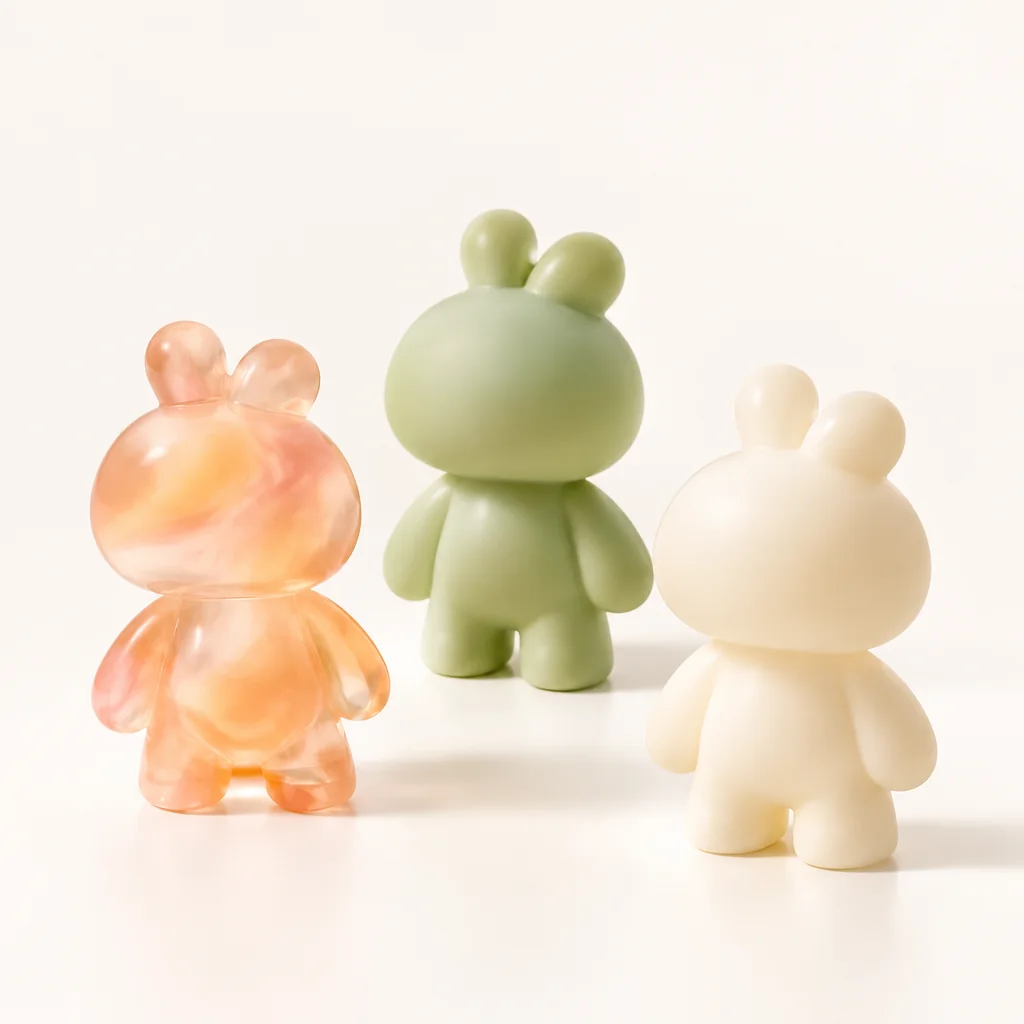
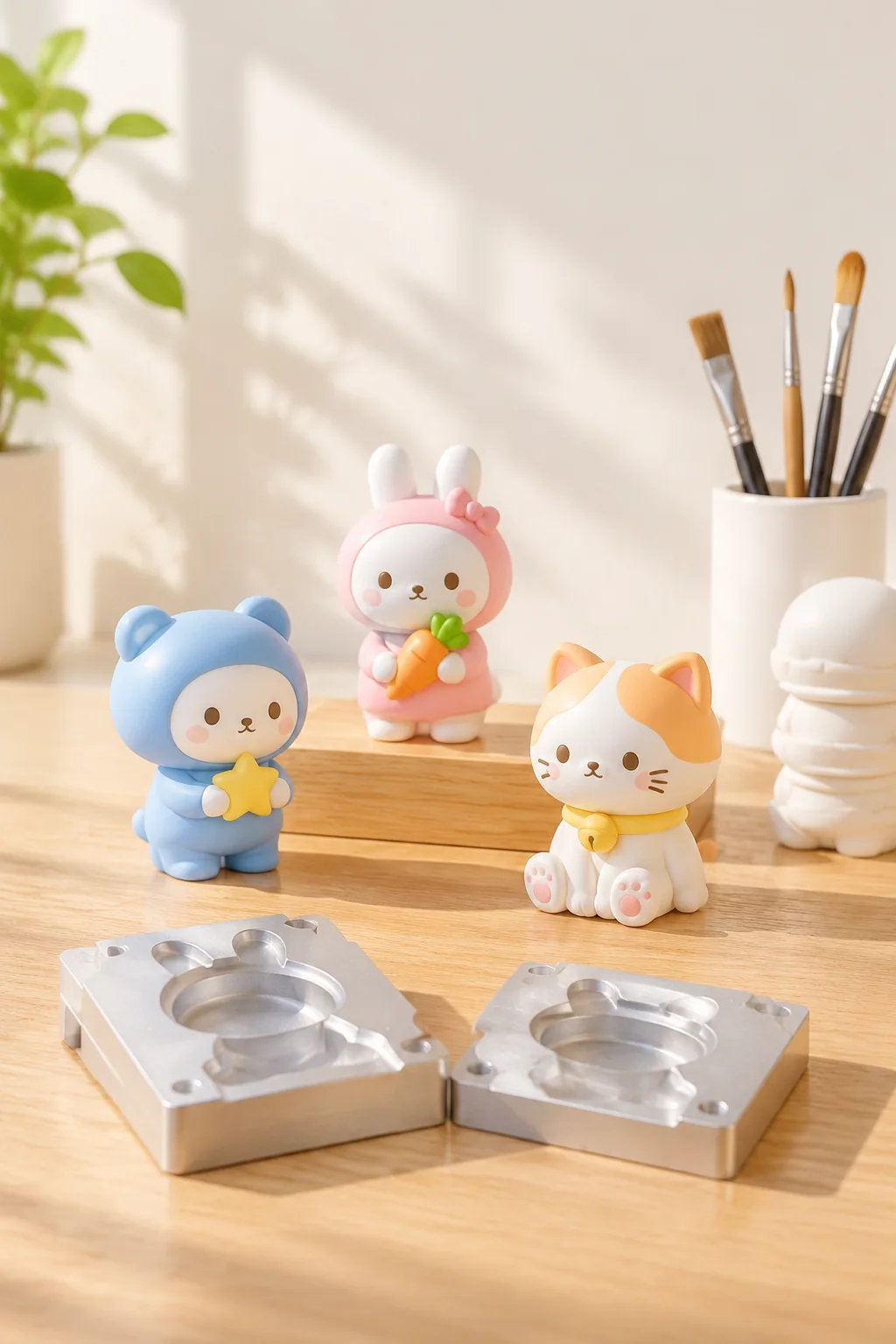
Resin is the process that lets a small studio make a real object. A silicone mould costs a fraction of steel, detail holds down to a fine line, and translucency or inclusions are possible in the cast itself rather than painted on afterwards. The trade-off is hand labour, so resin suits limited editions rather than long retail runs.
Resin figures on the bench


What you actually decide
Casting and de-airing
Bubbles are the difference between a collectible and a reject. We vacuum-de-air the resin before pouring and pressure-cure where the geometry needs it, then inspect every cast under a raking light before it reaches the paint bench.
- Vacuum de-airing before the pour
- Pressure pot for deep or slender sections
- Every cast inspected under raking light
Finishes only resin can hold
Translucency, pigment swirl and embedded elements live inside the material. Because the effect is cast rather than sprayed, it does not wear off at the corners the way a tinted lacquer does.
- Clear, smoked and pigmented translucent casts
- Marble and metallic powder effects
- Polished edges or a matte sanded finish
The parameters we quote against
Straight answers
For collectibles and display pieces, yes. For a toy that a young child will drop repeatedly, a moulded process is usually the better answer, and we will say so rather than sell you the wrong one.
The same file, a different object


Ready to quote your resin figure?
Send a drawing, a model or a reference photo. You will get a process route, a sample plan and a price band in one reply.