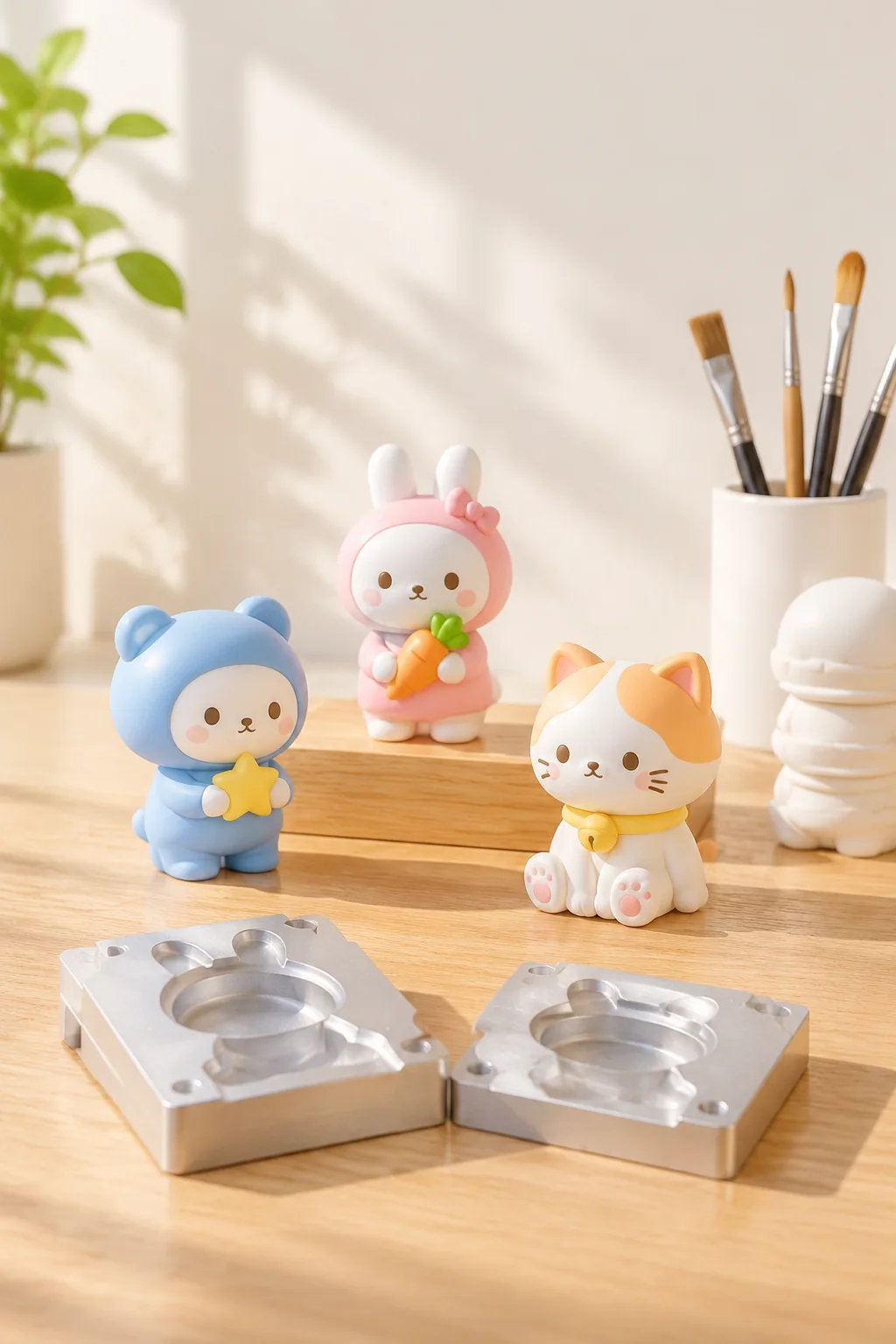
Round one is the shape. Expect the sculpt to come back close on proportion and wrong on character expression — the thing that makes the drawing appealing is usually a millimetre of eye position or a cheek curve that does not survive the first translation into three dimensions.
Round two is the moulded part. Now you are looking at seam placement, wall thickness, weight in hand and whether the part split holds up when it is actually assembled. Most structural changes happen here, and they are cheap here.
Round three is colour and finish. Chips against the approved artwork, gloss level, and how the paint behaves on the actual surface rather than on a test plaque. If the character has a licence holder, this is also where their approval loop sits, and that loop is usually the longest single wait in the programme.
A realistic plan assumes two rounds for a simple figure and three or four for anything with articulation, a licence or a translucent element. Adding a week to the plan costs less than discovering the need for it in week eleven.