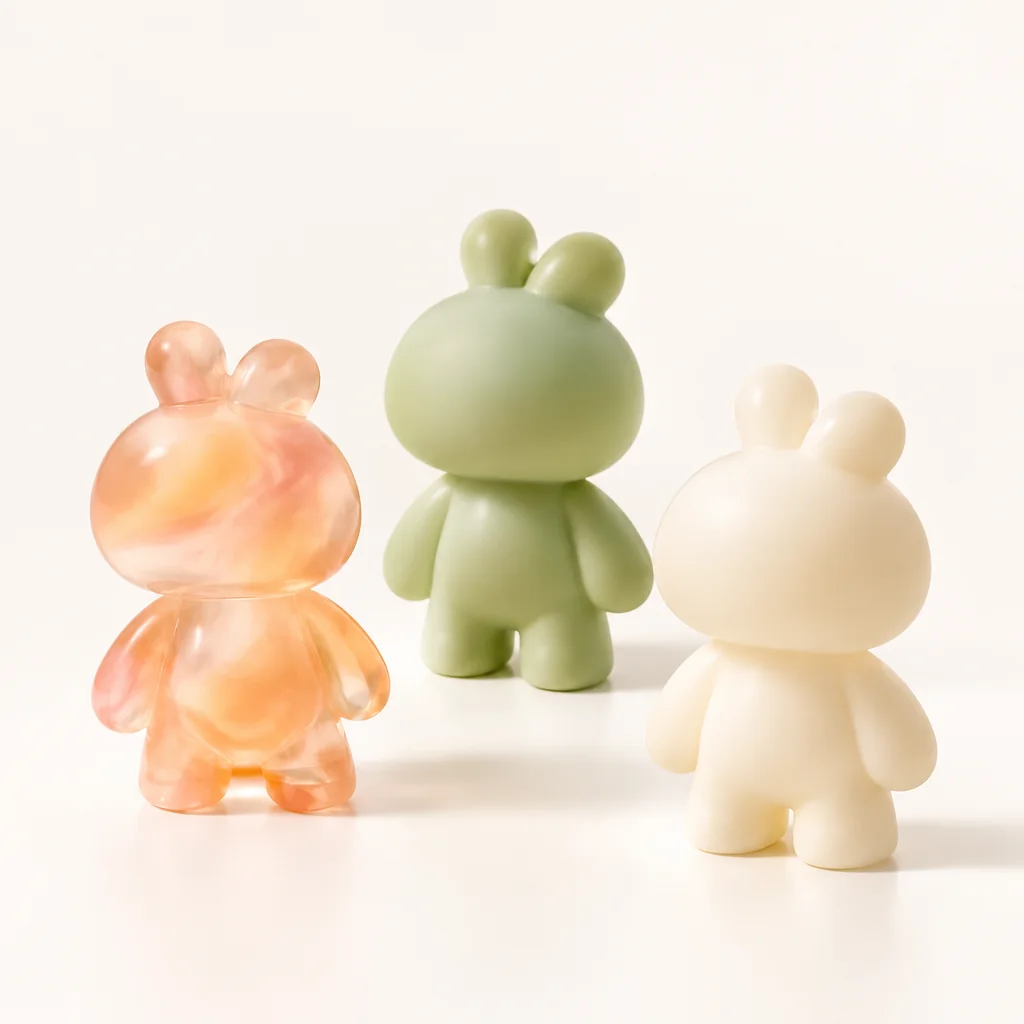
The cause is almost never the resin. It is air introduced during mixing, or air trapped against the mould wall when the pour front closes over a corner. Mixing slowly and scraping the sides of the cup cuts most of it; vacuum de-airing before the pour takes care of the rest.
Pour temperature matters as much as de-airing. Warm resin flows better and releases bubbles faster, but cures faster too, which shortens the window for the bubbles to travel out. Most shops settle on a narrow band and keep the room at a steady temperature rather than chasing a hotter mix.
Pressure curing is the reliable belt-and-braces answer for thin sections and sharp corners: cast, then cure under pressure so any remaining bubble collapses before the resin gels. It costs a pressure vessel and slows throughput, which is why it is usually reserved for the visible edition rather than every part.
For translucent pieces, specify the inspection condition in writing — light behind, distance, and what counts as a reject. Without that, "bubbles" becomes an argument at the end of the run rather than a spec at the start.