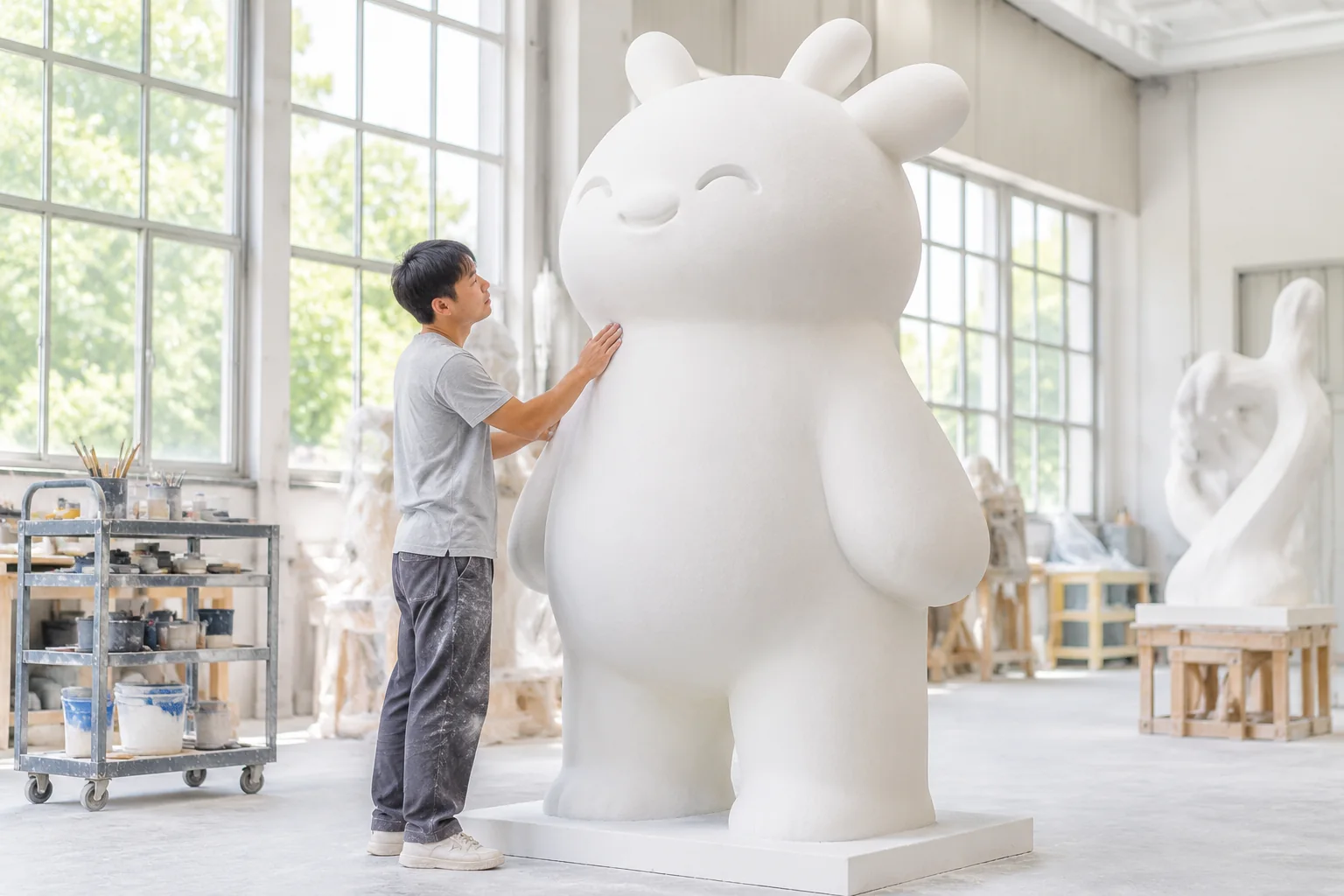
Armature first. A GRP skin is stiff but not self-supporting at that scale; the shape needs an internal steel frame that carries the loads from the base up through the body. Where the frame meets the skin is where cracks begin, so the connection points get designed, not improvised.
Anchors second. Is the piece standing free on a shop floor, bolted to a plinth, hung from a ceiling or weighted at the base? Each answer changes the base geometry and the transport weight. Retail displays usually want a low centre of gravity and a footprint wide enough to survive a customer leaning on it.
Transport sections third. Anything over roughly 1.8 m usually travels in two or three pieces with a locating collar and a hidden fixings kit. The seam has to be designed into the sculpture from the start — adding it later means repainting the whole piece on site.
Coating last. Interior display pieces need a UV-stable clear coat and a paint system that can be touched up locally, because a two-metre object will get knocked. Supplying a small touch-up kit with the piece is cheaper than a return visit.