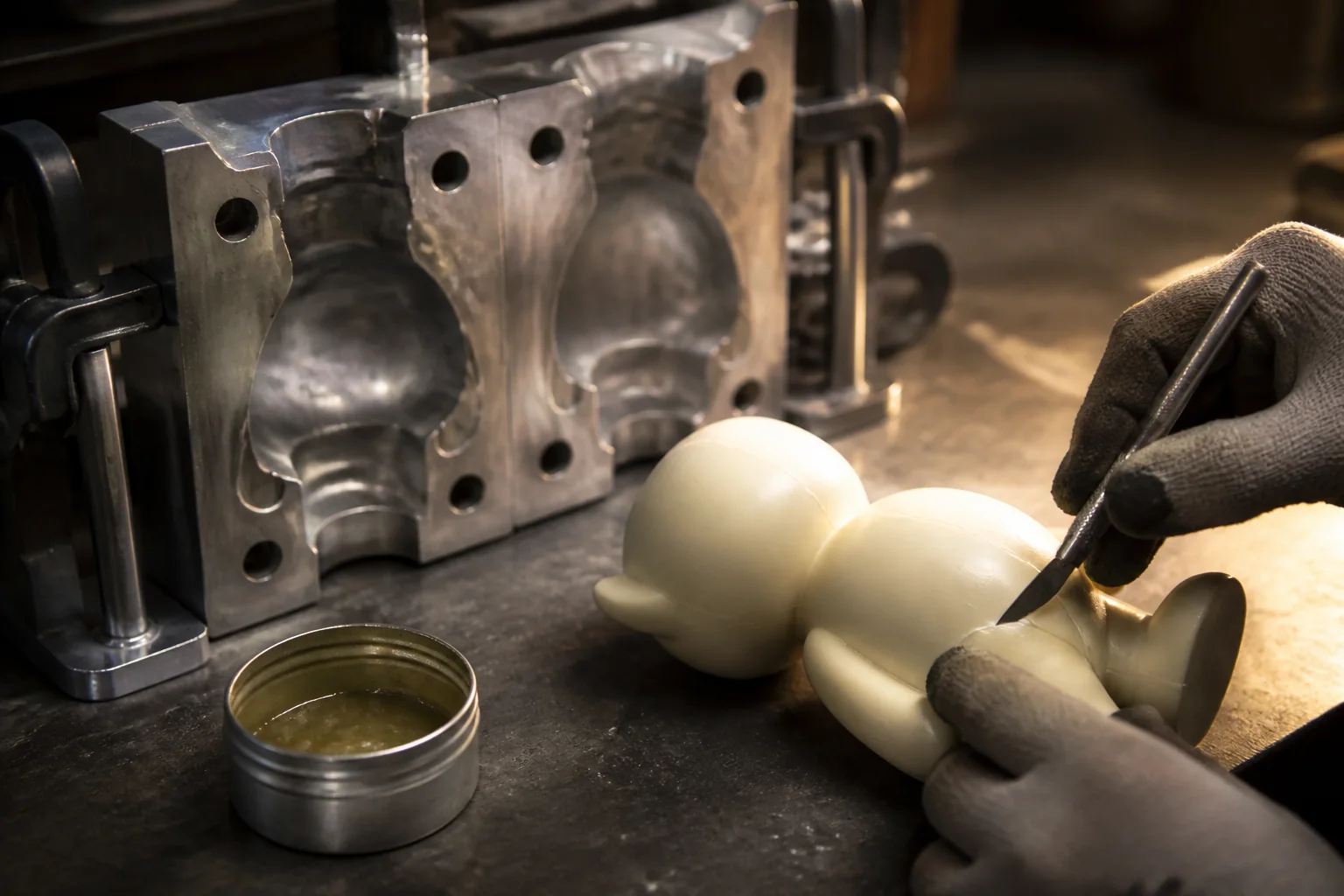
A seam line that stands proud usually starts at demoulding temperature — the part was pulled while still soft, so the flash stretched instead of snapping. A seam line that is sunken usually starts in the mould, where the parting line has worn.
Paint creep at a mask edge points to mask seating, not to the painter. If the mask is not pressed fully home on a curved surface, paint finds the gap. Colour drift across a run points to batch mixing; drift across a single part points to spray distance or gun angle.
Loose joints are an assembly-stage fault with a moulding cause: if the peg and socket are at opposite ends of their tolerance, some parts fit and some do not. Checking the first article by feel hides this; checking it with a gauge does not.
The practical output of all this is a short defect map pinned at the line: symptom, likely stage, who owns it. It turns a quality argument into a five-minute diagnosis, and it is the cheapest quality system we know.